Partial and Selective Demolition in Cape Town: Walls, Openings, Chimneys and Staircases
Selective demolition is the controlled removal of specific structural elements while the rest of the building stays standing and in use. One rule governs all of it: temporary support carries the load before the element is cut, never after. Every load-bearing removal needs a structural engineer to design the permanent replacement support.
Free site visit and written quote anywhere in greater Cape Town.
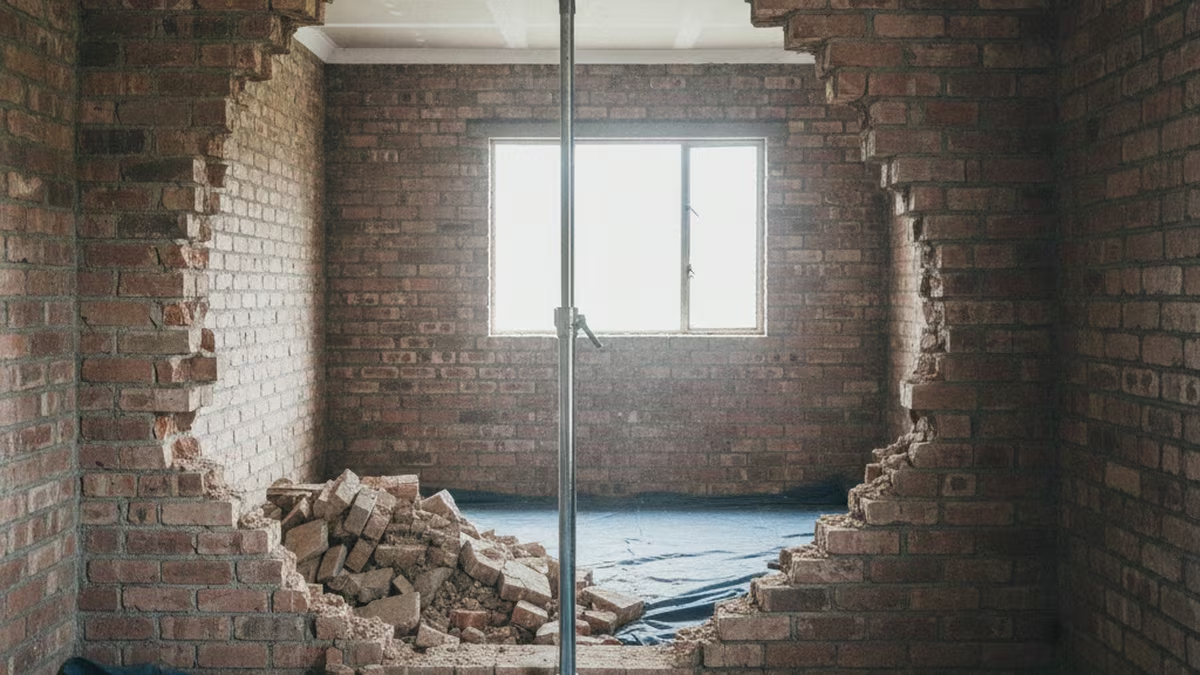
What gets removed selectively
| Element | Method | Temporary support | Engineer |
|---|---|---|---|
| Non-load-bearing internal wall | Hand demolition | None | No |
| Load-bearing internal wall | Hand demolition, propped | Needles and props | Yes — beam design |
| Structural opening in a wall | Cut and prop | Needles through the wall | Yes — lintel design |
| Chimney breast and stack | Top-down by hand off scaffold | Gallows brackets where retained | Where the breast above stays |
| Staircase | Hand demolition | Floor edge protection | Where it is structural |
| Upper storey | Machine or hand, top-down | Weather protection to the slab | Yes |
| Wing or extension | Machine, cut away from the retained structure | Support to the exposed junction | Yes |
Sequence for a load-bearing wall removal
- Confirm the load path. Establish what the wall carries: floor joists, roof structure, or a wall above.
- Engineer's design. The replacement beam is sized and specified before anything opens.
- Install needles and props. Steel needles pass through the wall above the removal line, propped both sides onto load-spreading plates.
- Cut the opening. The wall comes out in sections between the needles.
- Set the beam. The permanent beam is placed on its bearings and pinned up tight.
- Strike the props. Temporary support is removed once the beam carries the load.
- Make good. Bearings packed, junctions sealed, debris cleared.
Props alone do not carry a wall. Props carry needles, and needles carry the structure. Removing a load-bearing wall on props set under the ceiling is the most common failure on a domestic selective demolition.
Chimney removal
A chimney comes down from the top by hand, off scaffold, course by course. Machine demolition of a chimney is not controllable, because the stack is slender and the drop cannot be predicted. Two scopes exist: full removal including the breast, and stack-only removal where the breast stays and needs gallows-bracket support from the wall below.
Dust control in an occupied house
- Polythene screens with zipped access, taped to floor and ceiling
- Floor protection over the working route to the skip
- Negative-pressure extraction where the work runs longer than a day
- Damp-down at the breaker head rather than open hosing, given Cape Town water restrictions
- Daily clean-down of the route rather than one clean at the end
Frequently asked questions
How do I know whether a wall is load-bearing?
A load-bearing wall carries floor joists, a roof structure or a wall above it. Joist direction is the strongest indicator: joists run into a load-bearing wall and parallel to a non-load-bearing one. Wall thickness and position relative to the structure below indicate the load path. A structural engineer confirms it before any removal is priced.
Can a load-bearing wall be removed without an engineer?
No. Removing a load-bearing wall requires a structural engineer to size and specify the replacement beam and its bearings, and that design governs the temporary support arrangement as well. Work without the design carries a structural and an insurance exposure.
How long does removing an internal wall take?
A non-load-bearing internal wall comes out in half a day to a day, including containment and clearance. A load-bearing wall with needles, props and a beam runs 2 to 4 days, excluding the engineer's lead time. Making good the ceiling and floor junctions is a separate follow-on trade.
Can a chimney be removed while the house is occupied?
Yes. Chimney removal runs from outside off scaffold, with the internal breast opened only where the scope includes it. The flue is sealed and the roof made weathertight on the same day the stack comes down. Occupancy continues throughout on most jobs.
Do I need a permit for partial demolition?
Yes. Partial demolition normally requires the same City of Cape Town demolition permit as a full demolition, and structural alterations require approved building plans in their own right. A structure older than 60 years brings Section 34 of the National Heritage Resources Act into play even for partial works. See demolition permit.