Interior Strip-Out in Cape Town: Soft Strip, Fit-Out Removal and Tenant Reinstatement
A soft strip removes all non-structural interior material from a building while the shell stays standing. Fittings, linings, ceilings, partitions, flooring and redundant services come out, leaving bare structure, slab and live services. Soft strip precedes most commercial demolitions, and it is the entire scope of a fit-out removal or a tenant reinstatement.
Free site visit and written quote anywhere in greater Cape Town.
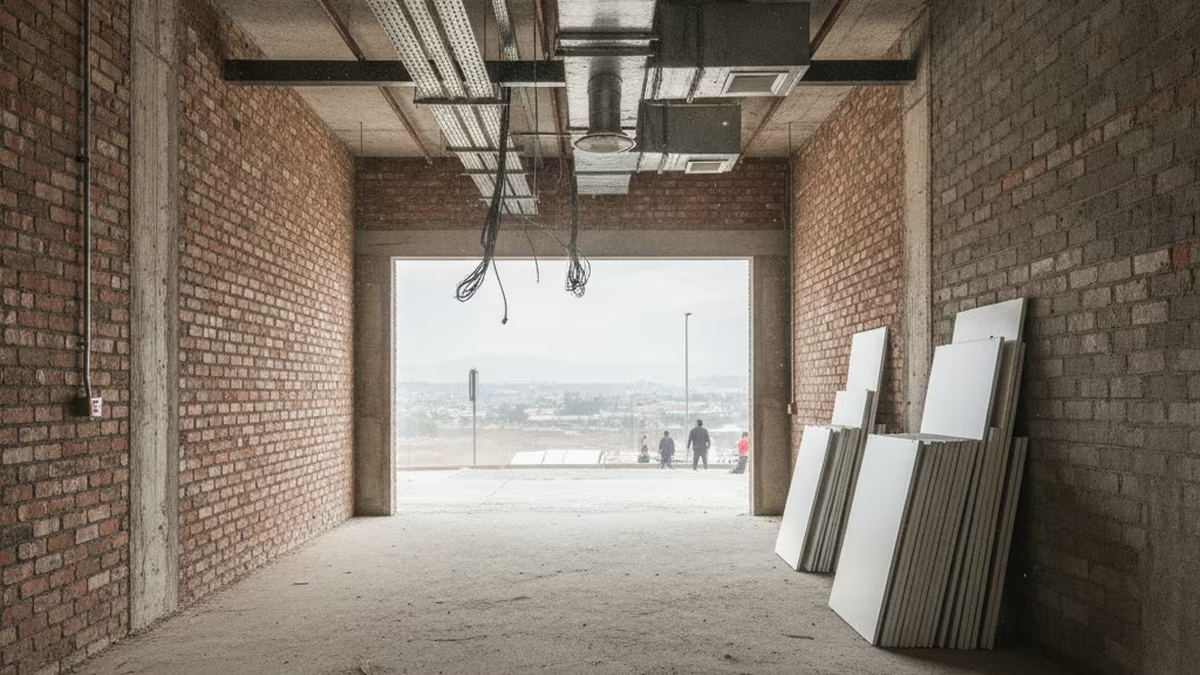
What comes out in a soft strip
| Element | Removed | Note |
|---|---|---|
| Suspended ceilings | Grid, tiles, hangers | Exposes services above for isolation |
| Partitions | Studwork, glazing, doors | Non-structural only |
| Floor finishes | Carpet, vinyl, tile, screed | Screed removal exposes the slab |
| Wall finishes | Linings, panelling, plaster | Plaster removal where the brick is retained |
| Joinery and fittings | Counters, shelving, cupboards | Recoverable items set aside |
| Sanitaryware | Basins, pans, cisterns, geysers | Isolated before removal |
| Kitchens | Units, tops, appliances, tiling | Services capped, not cut live |
| Redundant services | Cabling, ducting, pipework | Live services stay, isolated and labelled |
Tenant reinstatement
A commercial lease normally requires the tenant to return the unit to its original condition at the end of the term. Reinstatement is a strip-out with a defined end state rather than an open one. The schedule of condition attached to the lease sets that end state, and the strip works back to it: fit-out removed, walls made good, floor left to the specified finish, services capped at the agreed points. Working without the schedule risks stripping more than the lease requires, or less.
Sequence
- Services isolation. Power, water and gas isolated and certified before any tool goes in.
- Asbestos check. Ceiling tiles, floor tiles, pipe lagging and partition boards in older buildings are known asbestos locations.
- Salvage. Items to be retained or resold removed first, undamaged.
- Soft strip. Ceilings, partitions, finishes and fittings out, top down.
- Floor finishes. Tile, screed and adhesive removed to expose the slab.
- Clean and hand over. Shell swept, services labelled, waste disposed of with records.
Tile, screed and plaster removal
Floor tile removal exposes the bed beneath, and the bed usually needs to come off as well for a level new finish. Screed removal is dust-heavy work carried out with a floor saw and breaker, and it is the noisiest part of most strip-outs. Plaster removal back to brick applies where the brickwork is being exposed as a finish or re-plastered. All three are sections of a strip-out rather than standalone jobs, because they share the same containment, plant and disposal route.
Frequently asked questions
What is the difference between a soft strip and demolition?
A soft strip removes non-structural interior material and leaves the building standing and structurally intact. Demolition removes structure. A soft strip is frequently the first phase of a full demolition, because stripping recoverable and hazardous material by hand before the machine starts is safer and cheaper than sorting it out of rubble afterwards.
How long does an interior strip-out take?
A domestic kitchen or bathroom strip runs 1 to 2 days. A retail unit of 100 to 200 square metres runs 3 to 6 days. A full office floor runs 1 to 3 weeks depending on partition density and ceiling area. Services isolation and the asbestos check happen before that programme starts.
Do you remove asbestos ceiling tiles?
No. Asbestos removal is restricted to a registered asbestos contractor under the Asbestos Abatement Regulations, 2020. Suspect ceiling tiles, floor tiles, pipe lagging and partition boards are identified, isolated and left in place, and a registered contractor is appointed before the strip continues in that area.
Can a strip-out run while neighbouring units trade?
Yes. Strip-out in a trading centre runs behind hoarding with dust screening, and the noisiest operations are scheduled outside trading hours. Screed and tile removal are the operations most often pushed to night shifts, because floor saws and breakers carry through party walls.
Who decides how far a tenant reinstatement strips back?
The schedule of condition attached to the lease defines the end state, and the strip works back to that schedule rather than to a general standard. A reinstatement priced without the schedule risks removing more than the lease requires. The schedule is requested before the quote is prepared.