Roof Removal in Cape Town: Thatch, Corrugated Iron, IBR, Tiles and Trusses
A roof comes off before walls on every demolition, because the roof structure ties the walls together and removing it first makes the rest controllable. Roof removal is also a standalone job ahead of a re-roof. The covering determines the method, the disposal route and whether anything is worth recovering.
Free site visit and written quote anywhere in greater Cape Town.
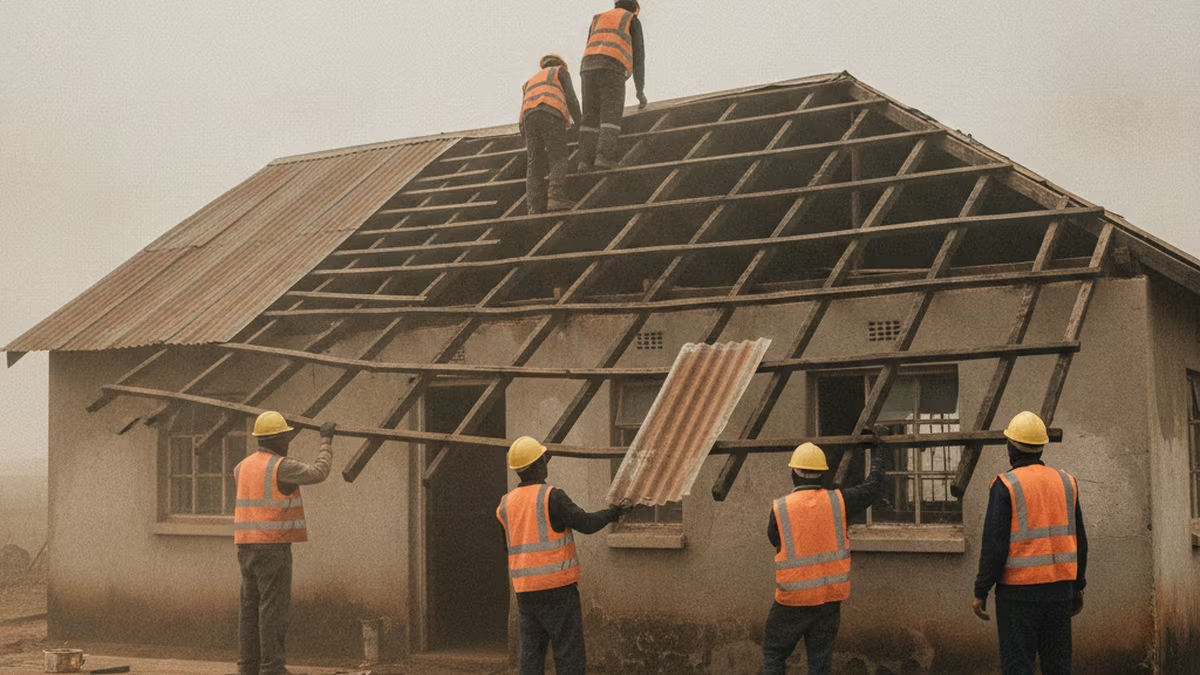
Coverings and method
| Covering | Method | Disposal | Recovery |
|---|---|---|---|
| Corrugated iron | Unscrewed, lifted flat | Scrap metal | Sound sheets resell |
| IBR sheeting | Unscrewed, lifted flat | Scrap metal | Sound sheets resell |
| Concrete or clay tiles | Lifted by hand, stacked | Rubble | Whole tiles resell |
| Slate | Lifted carefully by hand | Rubble | High where intact |
| Thatch | Stripped by hand, top-down | Bulky low-density waste | None |
| Fibre-cement sheeting | Tested before touching | Registered contractor if asbestos | None |
| Timber trusses and purlins | Dismantled or cut | Timber stream | Oregon pine is high value |
Fibre-cement roof sheeting is tested before it is touched. Sheeting on Cape Town houses and industrial buildings of a certain age is a known asbestos risk. Confirmed asbestos is removed by a registered asbestos contractor under the Asbestos Abatement Regulations, 2020, not by a demolition crew.
Thatch
Thatch is stripped by hand from the ridge down, and it produces a large volume of low-density waste that fills a skip fast without weighing much. Disposal is priced by volume rather than by weight for that reason. Thatch roofs concentrate in Noordhoek, Constantia, Hout Bay and the Winelands, and a thatched structure of any age deserves a heritage check before work is scheduled. Old thatch is a serious fire load, so hot work of any kind is excluded from the roof area until the thatch is off and away from the building.
Sheeting recovery
Corrugated iron and IBR sheeting resell readily as second-hand building material when they come off flat and unpunctured. Two things destroy that value: walking on the sheets during removal, and levering fixings out rather than unscrewing them. Sheets are therefore released from a crawl board or from below where the pitch allows, and screws are backed out rather than pulled.
The south-easter
A partly stripped roof is a large loose surface. Cape Town's summer south-easterly lifts sheeting off a roof faster than a crew can stack it, and a sheet in the wind is dangerous to everyone on and around the site. Sheeting work is scheduled early in the day during the windy season, and open roof areas are closed or weighted before the crew leaves site.
Frequently asked questions
Can old roof sheeting be reused?
Yes, where it comes off flat and unpunctured. Corrugated iron and IBR sheeting resell readily as second-hand building material. Two things destroy the value: walking on the sheets during removal, and levering fixings out instead of unscrewing them. Sheets are released from crawl boards and screws are backed out.
Is my fibre-cement roof asbestos?
Fibre-cement sheeting on Cape Town buildings of a certain age is a known asbestos risk and is tested before it is touched rather than assumed safe. Confirmed asbestos sheeting is removed only by a contractor registered under the Asbestos Abatement Regulations, 2020.
How is a thatch roof removed?
Thatch is stripped by hand from the ridge down and produces a large volume of low-density waste, so disposal is priced by volume rather than weight. Old thatch is a serious fire load, so hot work is excluded from the area until the thatch is off and clear of the building. A thatched structure of any age gets a heritage check first.
How long does roof removal take?
A single-storey house roof of 100 to 150 square metres strips in 1 to 2 days including trusses. Tile roofs run slower than sheeting because tiles are lifted and stacked individually. Thatch runs slower again. Wind during the summer south-easter season shortens the working day.
Are the trusses removed with the roof covering?
No, only where the scope calls for it. A re-roof frequently keeps sound trusses and replaces only the covering and battens. A demolition takes the whole structure. Oregon pine trusses in older Cape Town houses are dismantled at the joints rather than cut, because the timber carries real salvage value.