Reclaimed Building Materials from Cape Town Demolitions
A demolition contractor is the only business that generates second-hand building material rather than buying it. Material recovered during the soft strip is credited against the demolition quote, which lowers what the owner pays and keeps sound material out of landfill. Oregon pine out of a pre-1960s Cape Town house is the highest-value recovery in the trade.
Free site visit and written quote anywhere in greater Cape Town.
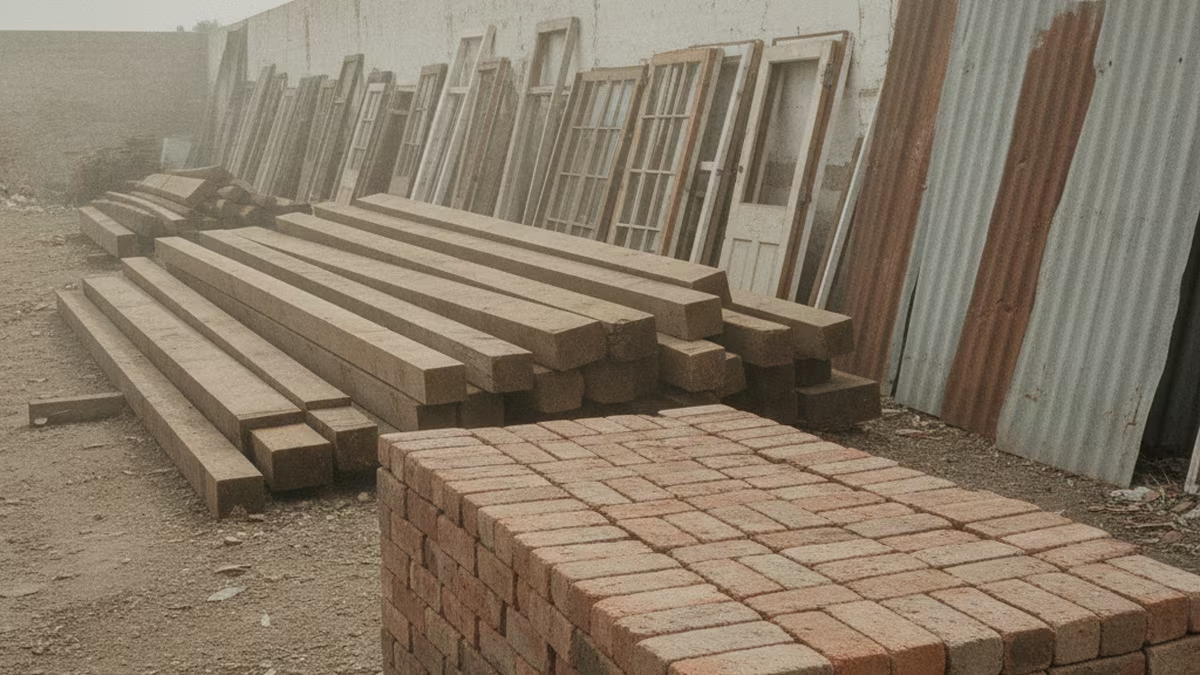
What carries value
| Material | Value | Condition that governs it |
|---|---|---|
| Oregon pine flooring, trusses, beams | Highest | Free of rot and borer; length matters |
| Face brick | High | Lime mortar releases it clean; cement mortar does not |
| Corrugated iron and IBR sheeting | Moderate | Flat, unpunctured, not walked on |
| Structural steel | High by weight | Section and grade |
| Sash windows, shutters, doors | High for period profiles | Intact frames and original ironmongery |
| Cast-iron railings, brackets, fireplaces | High | Unbroken castings |
| Pressed-metal ceilings | High | Removed panel by panel without creasing |
| Roof tiles and slate | Moderate | Whole, unchipped |
| Vibracrete panels | Low but real | Lifted intact rather than broken |
| Sanitaryware and geysers | Low | Working and undamaged |
Why Oregon pine matters here
Houses built in Cape Town before roughly 1960 used imported Oregon pine for floors, trusses and beams. The timber is dense, straight-grained and slow-grown, and no comparable new supply exists. Reclaimed Oregon sells into furniture, flooring and joinery, and demand consistently exceeds supply. Woodstock, Salt River, Observatory, Bo-Kaap, Gardens, Rondebosch and Wynberg carry the highest concentration in the metro. A house of that age is stripped by hand for timber before any machine touches it. See timber structure demolition.
Face brick and the mortar question
Whether brick is recoverable depends on the mortar rather than the brick. Lime mortar is softer than the brick it bonds, so bricks release cleanly and only need cleaning. Cement mortar is harder than many older bricks, so the brick breaks before the joint does. That single distinction decides whether a demolition yields thousands of saleable bricks or a pile of rubble, and it is checked at the site visit.
How the credit works
- Recoverable material is identified at the site visit and listed.
- Recovery is priced as hand labour, because salvage is slower than demolition.
- The estimated salvage value appears as a separate credit line on the quote.
- Material is recovered during the soft strip, before machine work starts.
- The owner keeps whatever they have marked to keep. The rest is sold and credited.
Salvage is shown as its own line rather than buried in the rate, so the owner can see what the material is worth and decide whether to keep it instead.
Frequently asked questions
What building materials are worth salvaging?
Oregon pine flooring, trusses and beams carry the highest value from a Cape Town demolition. Face brick where lime mortar releases it, structural steel by weight, period sash windows, shutters and doors, cast-iron railings and fireplaces, and pressed-metal ceilings all carry real value. Roof sheeting is worth recovering when it comes off flat and unpunctured.
Can I keep materials from my own demolition?
Yes. Anything you mark at the site visit is recovered during the soft strip before machine work starts and set aside for you. Owners most often keep period doors, shutters, sash windows, ironmongery, fireplaces, Oregon pine flooring and face brick. Recovery is priced as hand labour.
Why can some old bricks be reused and others not?
The mortar decides it, not the brick. Lime mortar is softer than the brick it bonds, so bricks release cleanly and need only cleaning. Cement mortar is harder than many older bricks, so the brick breaks before the joint does. That distinction is checked at the site visit.
How much is reclaimed Oregon pine worth?
Reclaimed Oregon pine is the highest-value material recovered from ordinary Cape Town demolition, and value rises with length and with freedom from rot and borer damage. Demand from furniture makers, flooring installers and joiners consistently exceeds supply, because no comparable new timber is commercially available.
Does salvage lower my demolition quote?
Yes. Estimated salvage value appears as a separate credit line on the quote rather than being kept by the contractor or buried in the rate. Showing it separately lets the owner see what the material is worth and decide whether to keep it instead of selling it.