Timber Structure Demolition in Cape Town: Decks, Pergolas, Roof Trusses and Floors
Timber is dismantled by hand rather than broken, because intact timber is worth money and broken timber is waste. Oregon pine recovered from a pre-1960s Cape Town house carries the highest salvage value of any material in ordinary demolition, and recovering it changes the economics of the job.
Free site visit and written quote anywhere in greater Cape Town.
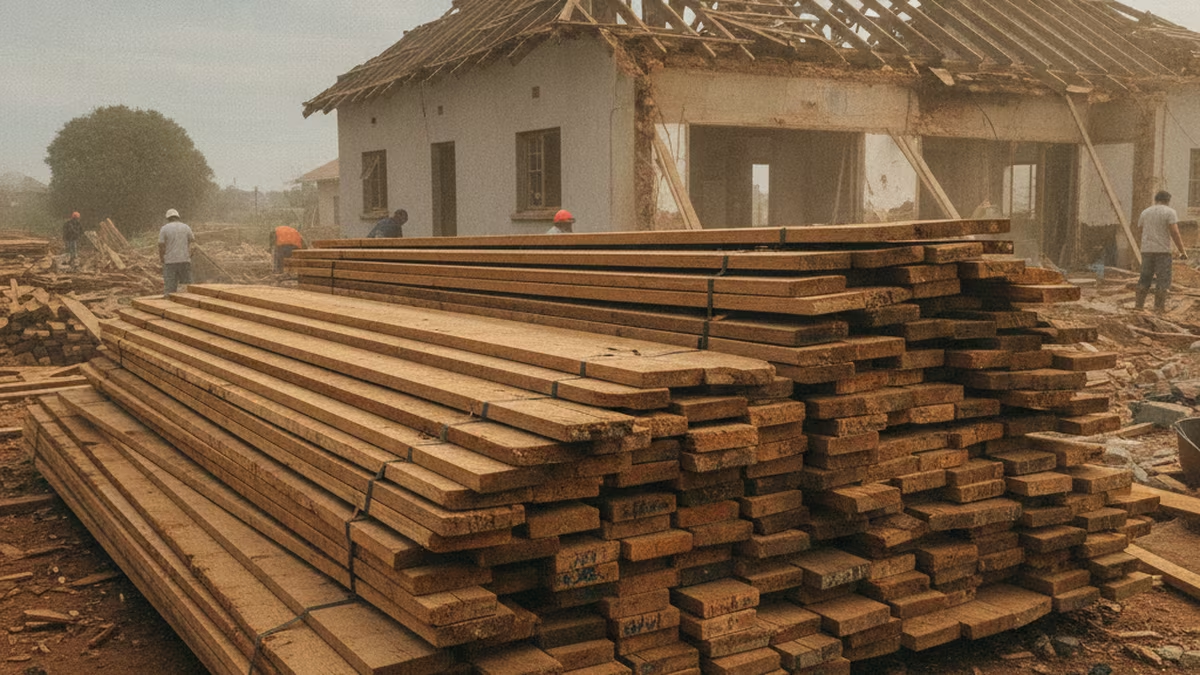
Timber elements and their salvage position
| Element | Method | Salvage value |
|---|---|---|
| Oregon pine floorboards | Lifted board by board, nails punched | High |
| Oregon pine trusses and beams | Dismantled at the joints | High |
| Modern SA pine trusses | Cut and dropped | Low — nail plates limit reuse |
| Timber decking | Unscrewed, substructure last | Moderate if hardwood |
| Pergolas | Dismantled at fixings | Moderate |
| Wendy houses and timber outbuildings | Panel by panel | Whole structure often resells |
| Skirtings, architraves, doors | Prised carefully | High for period profiles |
Why Oregon pine matters in Cape Town
Houses built in Cape Town before roughly 1960 used imported Oregon pine for floors, trusses and beams. The timber is dense, straight-grained and slow-grown, and nothing comparable is commercially available now. Reclaimed Oregon sells for furniture, flooring and joinery, and demand consistently exceeds supply. Woodstock, Salt River, Observatory, Bo-Kaap, Gardens and Rondebosch carry the highest concentration of it in the metro. A house of that age is stripped by hand for timber before any machine touches the structure.
Decks and pergolas
A deck comes apart top-down: boards unscrewed, joists released, then the substructure and posts. Posts set in concrete are dug out rather than cut at ground level, because a cut-off post left in the ground obstructs whatever replaces the deck. Hardwood decking in sound condition resells; softwood decking that has weathered past its surface rarely does.
Condition limits on recovery
Timber recovery depends on three conditions that are assessed on site before the salvage is priced into the quote.
- Rot. Timber with wet or dry rot at bearings and ends recovers only in the sound lengths between.
- Borer. Powderpost and furniture beetle damage is common in older Cape Town roof timber, and heavily infested material cannot be resold.
- Fixings. Modern nail-plated trusses cannot be dismantled at the joints without destroying the plates, which limits them to low-value reuse.
Frequently asked questions
Is reclaimed Oregon pine worth recovering?
Yes. Oregon pine recovered from a pre-1960s Cape Town house carries the highest salvage value of any material in ordinary demolition, because the timber is dense and straight-grained and no comparable new supply exists. Demand from furniture makers, flooring installers and joiners consistently exceeds supply. Recovery is priced as hand labour and offset by the value.
Can floorboards be lifted without splitting them?
Yes. Boards lift intact where nails are punched through rather than levered out, and where the board is released along its full length before it is raised. Tongue-and-groove boards need the tongue broken on the first board only. Expect 70 to 90 percent recovery on sound Oregon flooring and considerably less where rot is present at the joist bearings.
Do you remove timber decks including the posts?
Yes. Boards, joists and the substructure come out, and posts set in concrete are excavated rather than cut at ground level. A cut-off post left in the ground obstructs foundations, paving or planting that replaces the deck. Post footings are backfilled and compacted after removal.
Can modern roof trusses be reused?
No, rarely. Modern trusses are joined with pressed steel nail plates that cannot be released without destroying the plate and damaging the timber around it. The timber recovers for low-value use such as shuttering and bracing. Old jointed trusses in Oregon pine dismantle at the joints and recover fully.
What happens to timber that cannot be salvaged?
Unsalvageable timber is separated from masonry and concrete on site and disposed of at a licensed landfill as a separate waste stream. Treated and painted timber cannot be burned or chipped for mulch. Separation happens at source rather than at the landfill, because mixed loads cost more to dispose of.